

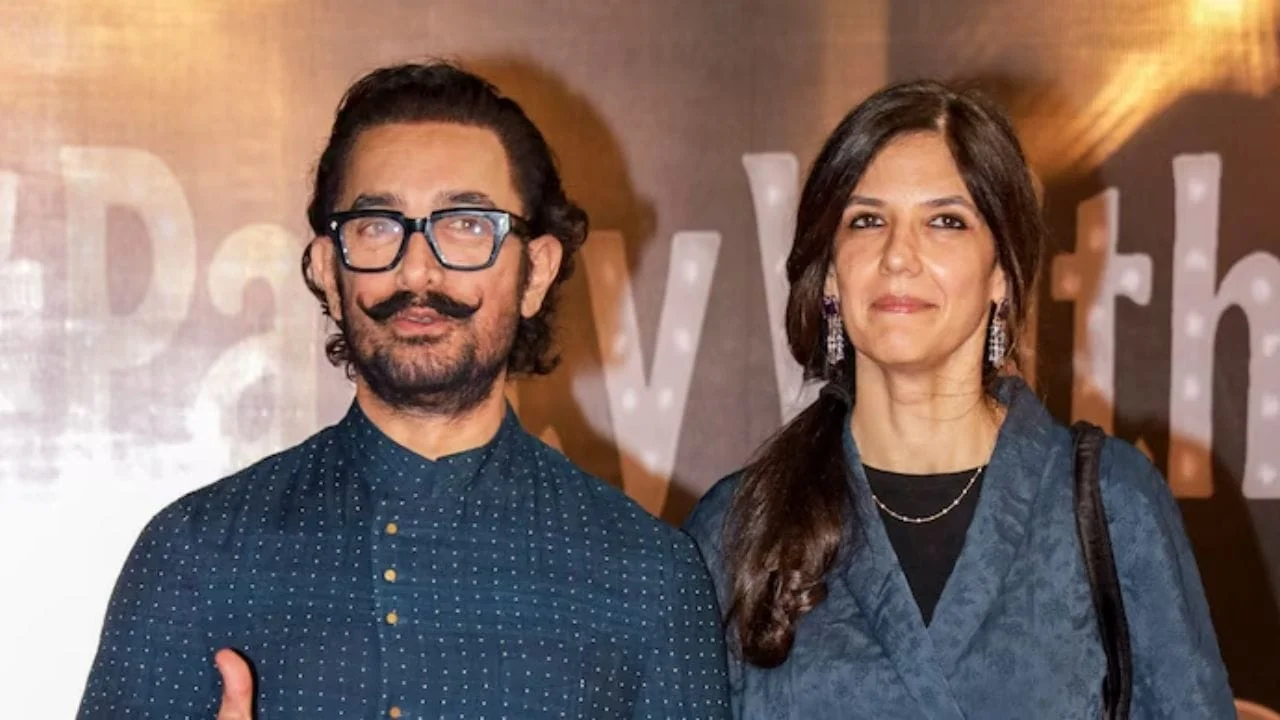
Bollywood superstar Aamir Khan has addressed the swirling rumors and religious debates surrounding his third marriage to Gauri Spratt, stating clearly that no religious conversion took place. According to TV9 Bangla, Aamir emphasized that his marriage was solemnized under the Special Marriage Act, a civil marriage law in India, and that Gauri, originally a Christian, has not converted to any other religion.
In a recent interview, Aamir Khan expressed frustration over the baseless trolling and speculation about his personal life. "Gauri, Kiran, or Rina—none of them have changed their religion," he said sharply. He also mentioned that Gauri does not strictly observe any religious rituals, reinforcing that religion has never been a focal point in their relationship.
Reflecting on his family’s history of interfaith marriages, Aamir shared that such unions are not new in his household. "My two sisters married into Hindu families, and my daughter is also married to a Hindu man. My younger brother Mansoor Khan's wife is a Christian," he explained. He stressed that love, trust, and mutual respect hold far more importance than religious identities in his family traditions.

Aamir Khan and Gauri Spratt tied the knot in a private ceremony at his Mumbai flat in Pali Hill on July 5, marking the actor’s third marriage. Previously, he was married to Reena Dutta from 1986 until their divorce in 2002 and later to director Kiran Rao in 2005. Though Aamir and Kiran announced their separation in 2021, they continue to share parental responsibilities for their son Azad equally.
The actor also addressed the societal backlash labeling his new marriage as 'love jihad,' a controversial and communal term. He responded with reasoned arguments, which have since sparked widespread discussion across social media platforms.
Why this matters
Aamir Khan's candid clarification provides insight into the challenges faced by public figures amid sensitive societal issues like religion and marriage in India. His stance underlines the growing importance of personal freedom and secular values in contemporary relationships, while highlighting the ongoing tensions between tradition and modernity in Indian society.
By openly discussing his family’s interfaith marriages, Aamir contributes to a broader conversation about religious tolerance and the need to look beyond faith in matters of love and partnership.
In a climate often charged with misinformation and prejudice, Aamir Khan’s forthrightness helps demystify misconceptions and encourages a more inclusive understanding of personal choices.