
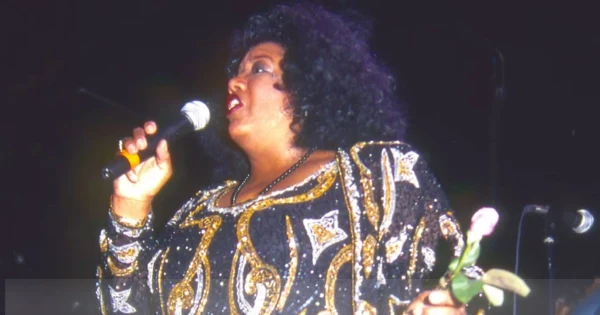
Arlene Smith, the co-founder and lead vocalist of The Chantels who penned and performed the group's enduring 1957 classic "Maybe," passed away Wednesday at a rehabilitation center in her native New York City. She was 84.
According to Geo TV, Smith died of natural causes following a series of hospitalizations, as confirmed by her friend Matt Beckoff to The Hollywood Reporter. Her passing marks the end of an era for a vocalist whose classically trained soprano helped redefine popular music and lay the groundwork for the girl group sound that would dominate the 1960s.
Born in the Bronx on October 5, 1941, Smith demonstrated remarkable musical aptitude from an early age. Her classical training as a child culminated in a performance at Carnegie Hall when she was just 12 years old—a feat that foreshadowed the vocal precision she would later bring to doo-wop and rhythm and blues. This formal background distinguished her from many of her contemporaries and gave The Chantels a polished, almost operatic quality that set them apart in a crowded field.

Smith and four schoolmates—Lois Harris, Sonia Goring, Jackie Landry, and Renée Minus—had honed their harmonies for years in the choir of Saint Anthony of Padua Church on Prospect Avenue in the Bronx. In the summer of 1957, the group auditioned for record producer Richard Barrett, himself a member of the doo-wop group The Valentines. The meeting proved fateful; the group signed with End Records shortly thereafter.
Their debut single, "He's Gone," which Smith wrote while practicing piano about a former boyfriend, achieved only modest chart success. But their follow-up recording would change everything. Recorded in a midtown Manhattan church and released in December 1957, "Maybe" became a genuine cultural phenomenon. The song climbed to No. 15 on the pop charts and No. 2 on Billboard's R&B chart, establishing The Chantels as one of the first all-female R&B vocal groups to achieve mainstream national recognition.
At a time when rock and roll was still predominantly male-dominated, The Chantels' success helped crack open doors for the girl groups that followed. The Shirelles, perhaps the most prominent act to emerge in their wake, openly credited The Chantels as a primary inspiration, with singer Shirley Alston Reeves once stating, "They were our inspiration." This lineage underscores how Smith and her groupmates effectively built the template that artists like The Ronettes and The Crystals would later expand upon.
Why this matters
The Chantels emerged during a pivotal moment in American music history when doo-wop was transitioning from street-corner harmony to commercial radio dominance. Their integration of classical vocal techniques with rhythm and blues created a sophisticated sound that broadened the audience for R&B and challenged prevailing industry assumptions about what young female performers could achieve. Smith's compositional contributions, including writing "Maybe" itself, were particularly significant in an era when women were rarely credited as songwriters in popular music.
Smith departed The Chantels in 1959 to pursue a solo career, though she periodically reunited with surviving original members for special performances. One particularly poignant reunion occurred during a 1990s PBS special, where the group dedicated "Maybe" to bandmate Jackie Landry following her death in 1997. The Chantels received induction into the Vocal Group Hall of Fame in 2002, cementing their legacy in American popular music.
Rolling Stone recognized the enduring power of Smith's composition in 2003, placing "Maybe" at No. 199 on its list of the "500 Greatest Songs of All Time." The track remains a touchstone of the doo-wop era, its haunting melody and Smith's soaring lead vocal continuing to resonate with listeners more than six decades after its release.