
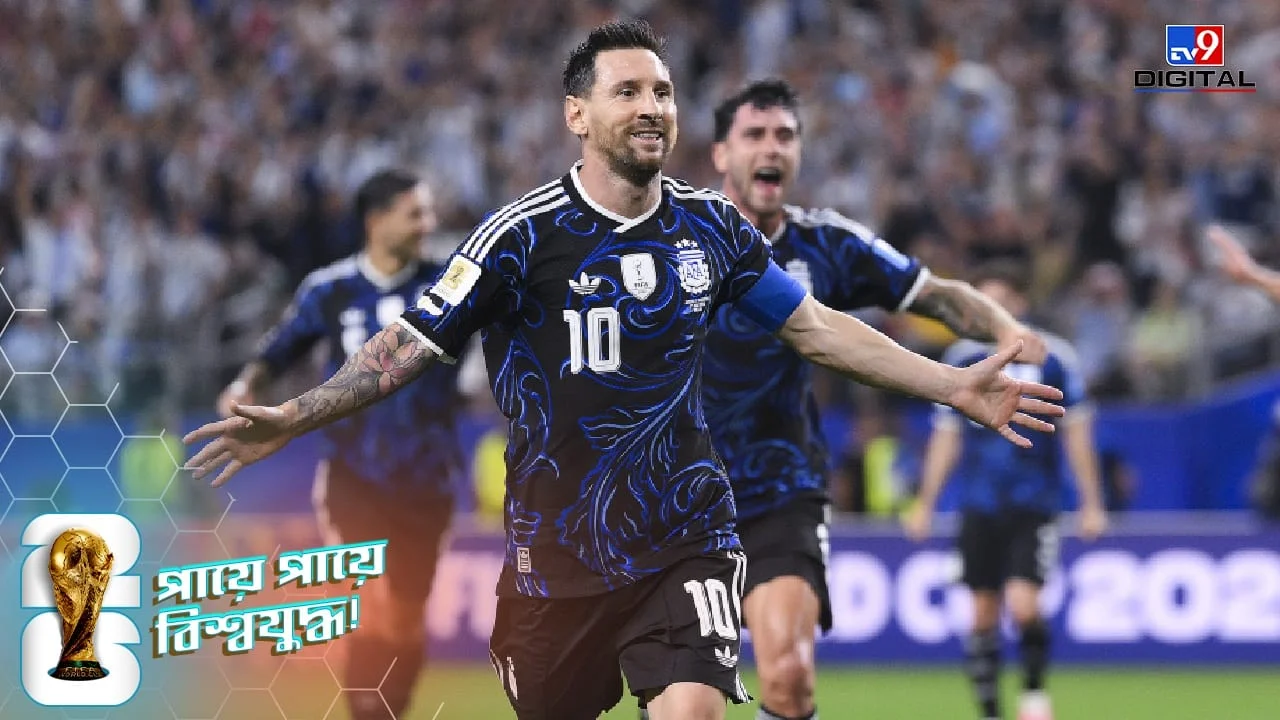
Argentina has formally requested FIFA to allow them to wear their blue away jersey in the upcoming World Cup semifinal match against England. According to TV9 Bangla, this special appeal was submitted ahead of the crucial game scheduled to take place in Atlanta on Wednesday.
While the request has not yet been approved, FIFA is expected to make a final decision on Tuesday. Argentina had previously worn the blue jersey once during the group stage, notably in their 3-1 victory over Jordan. However, the timing of this new request has sparked speculation about underlying reasons behind the preference for the blue kit in this high-stakes encounter.
Some believe Argentina's insistence on the blue jersey is rooted in superstition or cabala, a belief system deeply ingrained in Argentine football culture. Historically, Argentina and England have faced each other five times in World Cup history, including three knockout matches. England has won three of these encounters, while Argentina has won twice, including the famous 1986 "Hand of God" match and the 1998 Round of 16 victory where Argentina also wore the blue jersey.

Moreover, FIFA has designated England as the home team for this semifinal match, which typically means Argentina would wear an alternate kit, potentially the blue away jersey. This practical reason aligns with the team's desire to don the blue jersey, but the cultural and historical significance appears to play an equally important role.
The Argentine squad's adherence to cabala extends beyond jerseys, encompassing rituals such as following the same pre-match routines and watching games from the same spot, highlighting how superstition influences their preparations.
As Lionel Messi leads Argentina to face Harry Kane's England at Atlanta, fans will not only watch the intense battle on the field but also pay close attention to which jersey Argentina chooses to wear, adding another layer of intrigue to this World Cup showdown.
Why this matters
Argentina's request highlights the intersection of sports regulations, cultural beliefs, and historical legacies in high-pressure matches. The jersey choice symbolizes more than uniform color; it reflects team identity, superstition, and psychological readiness, factors that can impact player performance and fan engagement in major tournaments.
FIFA's decision will set a precedent for how teams can express cultural nuances within the framework of official rules during global events.