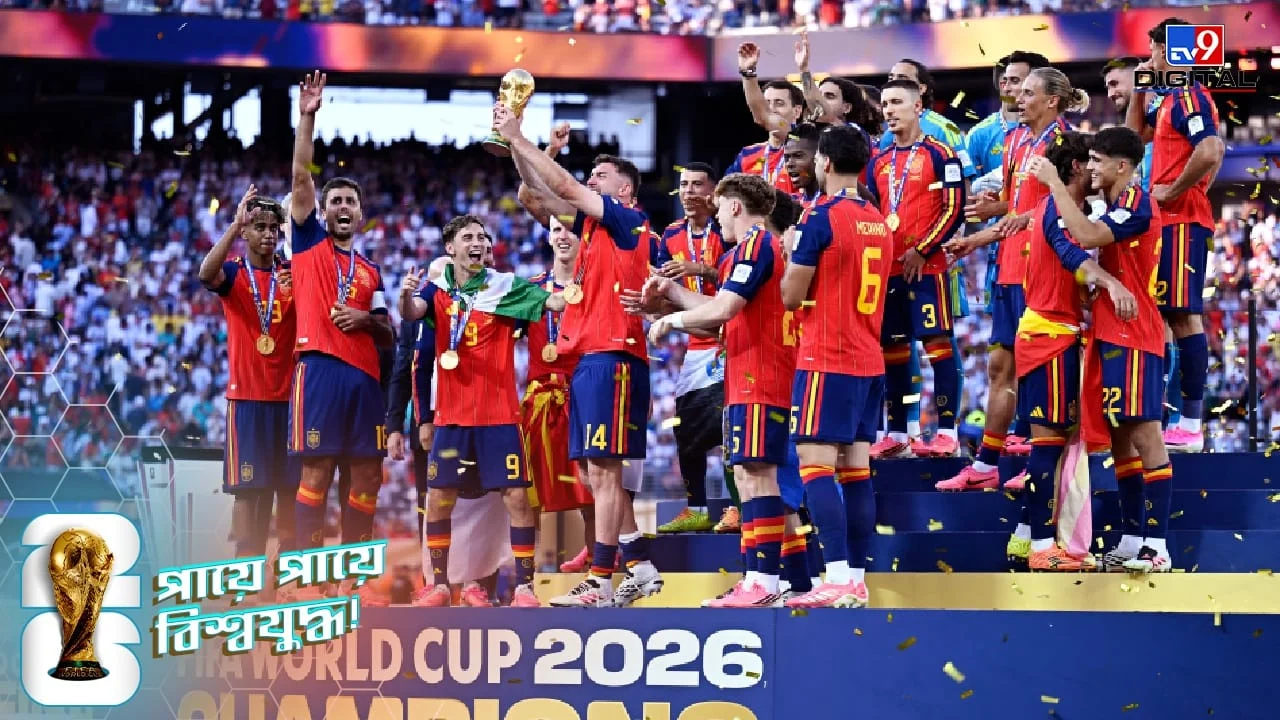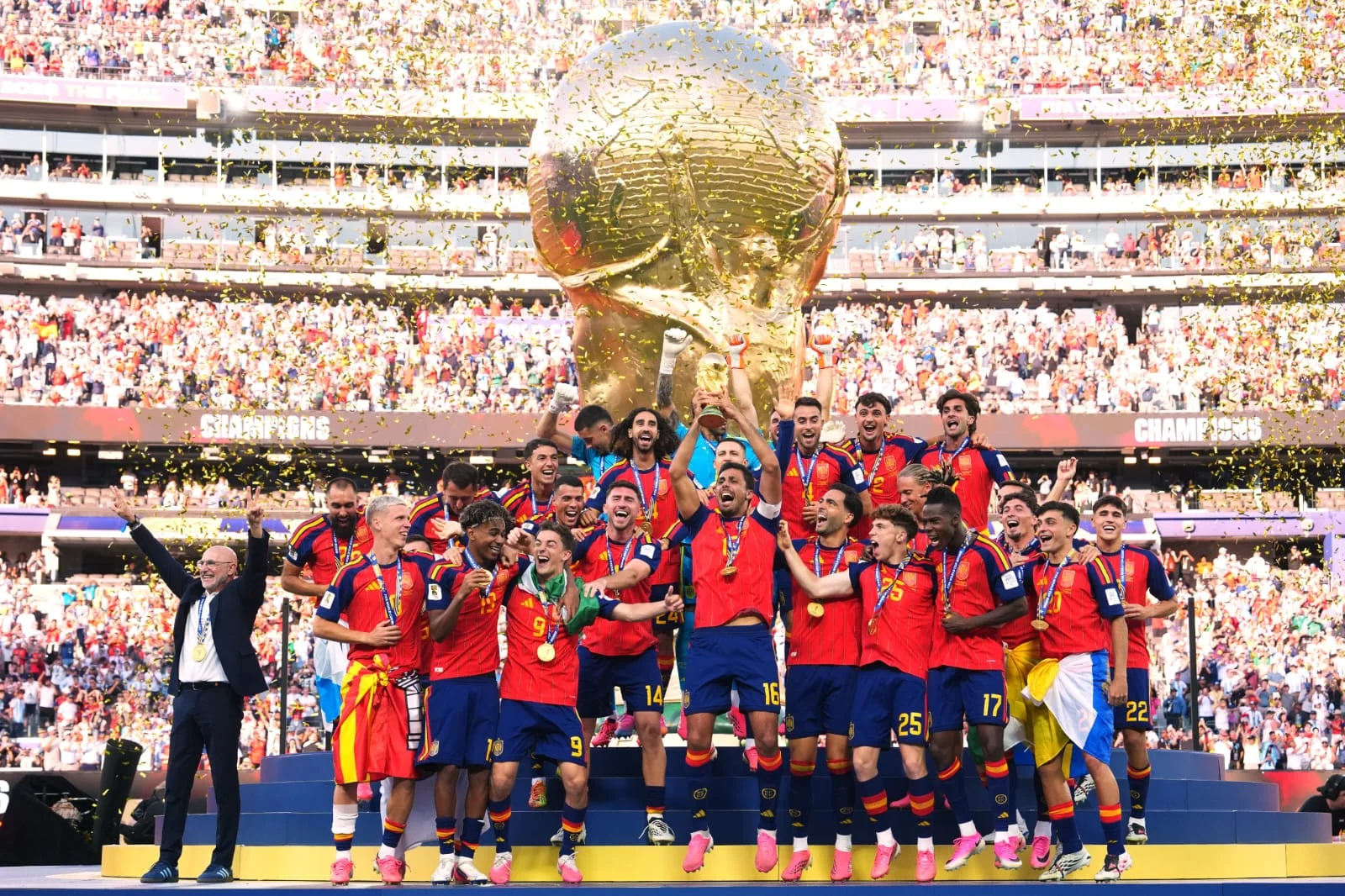

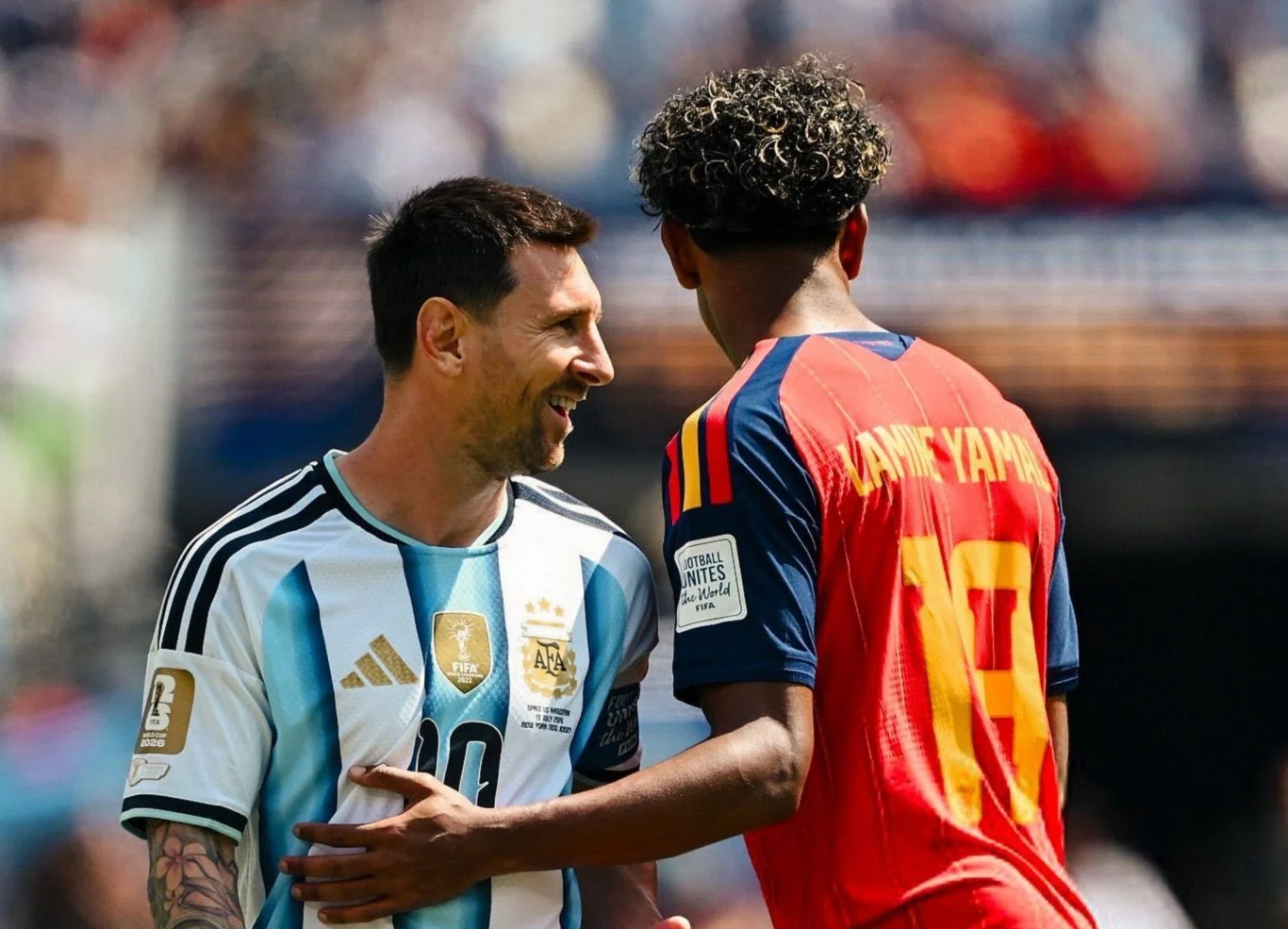
Spain secured their second World Cup championship since 2010 by defeating Argentina at MetLife Stadium, marking a significant shift in global football leadership from Lionel Messi to rising star Lamine Yamal. RevSportz reported that the final, held under gloomy skies on a rain-soaked day in New Jersey, symbolized the end of an era for 39-year-old Messi and the emergence of a youthful Spanish squad led by 19-year-old Yamal.
Messi, visibly exhausted and somber, stood apart on the podium after the final whistle, his gaze fixed forward yet burdened by the weight of a career that carried the hopes of millions of Argentine fans worldwide for over two decades. Although Argentina hoped to endure the first half and then rely on what has been dubbed the "Messi system," Spain’s coach Luis de la Fuente implemented a tactical strategy that effectively neutralized Messi's influence, highlighting Spain’s evolution in football philosophy.
The Spanish team displayed a modernized style of play that combines quick vertical passes, high tempo, and strong defensive organization, departing from the classic tiki-taka of their 2010 victory. Throughout the knockout stages, Spain conceded only one goal, and in the final, Argentina struggled to penetrate Spain's defense. Messi’s first touch did not come until 12 minutes into the game, underscoring the strategic containment executed by Spain.

Young talent Lamine Yamal repeatedly challenged Argentina’s defense, receiving warm embraces from teammates on the podium as the stadium’s giant screens contrasted his celebration with Messi’s solemn expression. Argentina’s goalkeeper Emiliano Martinez performed heroically, making numerous saves, but even his efforts could not stem Spain’s relentless attacks. By halftime, Argentina had failed to register a shot on target, while Spain relentlessly pressured their opponents.
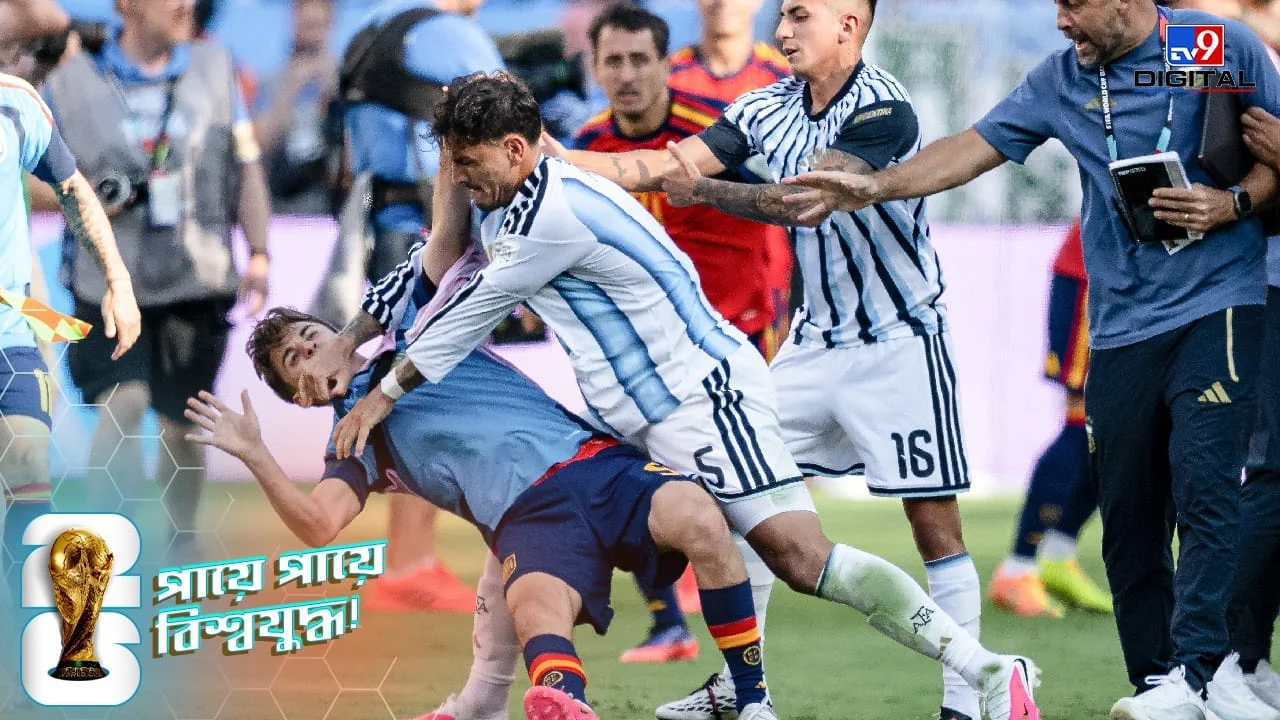
Argentina’s coach, Lionel Scaloni, made defensive substitutions in an attempt to regain control, but frustration led to tactical fouls that backfired, culminating in Enzo Fernandez’s red card late in the match. Reduced to ten men, Argentina’s strategy narrowed to survival and reliance on Martinez in a potential penalty shootout, but Spain’s direct and progressive style left little room for hope.
Why this matters
The match not only signified the passing of the football torch from one legendary generation to the next but also underscored the evolution of international football tactics. Spain’s triumph reflects a new era where youthful energy, combined with refined strategy, can overcome even the most storied veterans. For Messi, this final may represent the last chapter of his illustrious World Cup journey, cementing his legacy while highlighting the inevitable cycle of renewal in the sport.
As Messi’s era concludes, the global football community watches keenly as Spain’s new generation, led by Yamal and Ferran Torres, steps into the spotlight, promising fresh narratives and innovations on the world stage.