

Gulf countries are actively developing alternative oil export routes and new port facilities to lessen their reliance on the Strait of Hormuz, following increased tensions and security threats in the region. According to TV9 Bangla, this move comes after repeated attacks on vessels and heightened Iran-US conflicts have disrupted maritime security and oil transportation through the strategic waterway.
The Strait of Hormuz has historically been one of the world's busiest oil transit chokepoints, responsible for transporting about 20% of the global oil supply. However, recent instability—including explosions and gunfire—has severely reduced traffic and caused safety concerns for seafarers, with casualties including Indian nationals. Additionally, shipping companies are facing rising fees when passing through the strait.
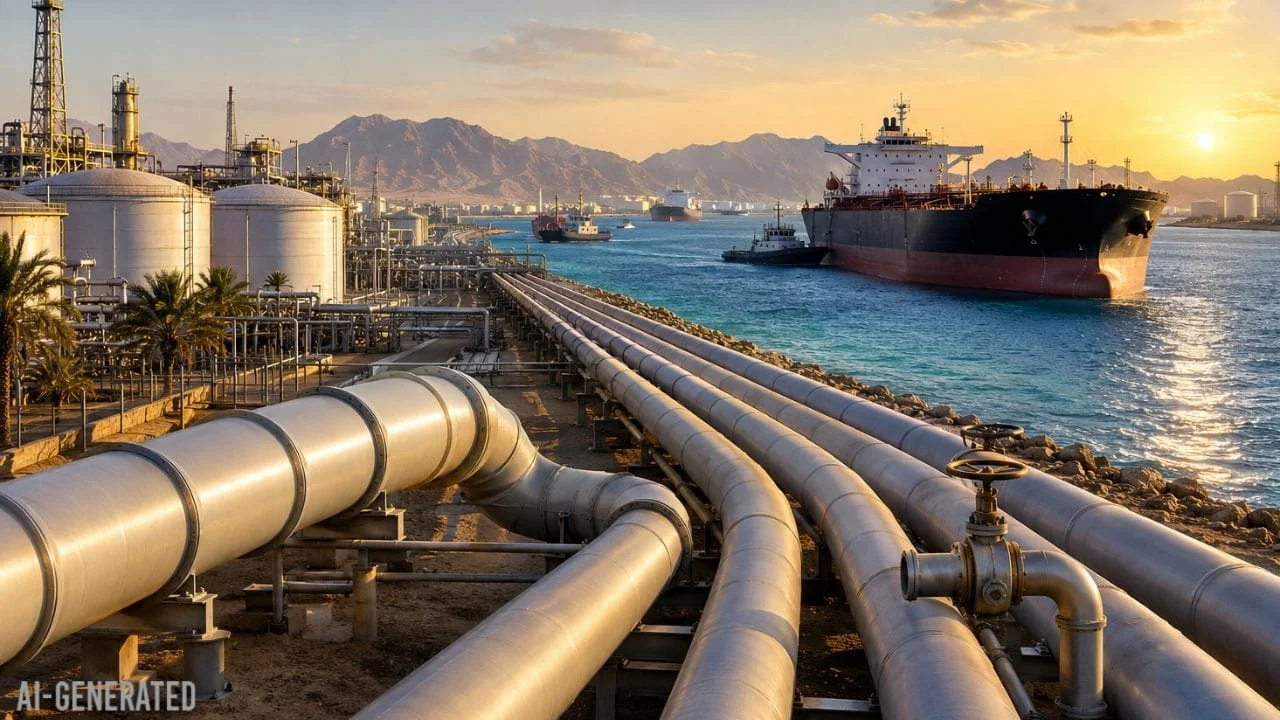
In response, Gulf nations are accelerating projects to create pipelines and infrastructure that bypass Hormuz entirely. The United Arab Emirates and Iraq have already begun constructing major pipelines intended to reroute oil exports away from the strait. The UAE's West-East pipeline, about half completed, is expected to double the country's export capacity by 2027, transporting up to 3.6 million barrels per day through Fujairah on the Arabian Sea coast.
Iraq has started work on a 435-mile Basra-Haditha pipeline, which will eventually connect to Jordan, Syria, and Turkey, with a planned capacity of 2.5 million barrels per day. Prime Minister Mohammed Shia al-Sudani described this as a key step to safeguard oil exports from regional instability. Although $1.5 billion has been allocated, the completion date remains uncertain.
Saudi Arabia is also exploring options to increase its crude pipeline capacity to 9 million barrels per day, but discussions are still in early stages.
Alongside pipelines, the UAE plans to build a large new port and container terminal on the Arabian Sea side of the Hormuz Strait. This facility aims to enable cargo ships to enter Gulf waters without passing through Hormuz, potentially competing with Dubai's Jebel Ali port in the future.
Why this matters
The strategic significance of the Strait of Hormuz remains high despite these diversification efforts, as an estimated 7 to 9 million barrels of oil and refined fuels continue to transit daily through the strait. Moreover, many alternative routes depend on the stability of the Red Sea and neighboring regions, which presents its own challenges. While Gulf nations seek to limit Iran's influence by reducing dependence on Hormuz, completely eliminating the strait's geopolitical importance and Tehran's leverage is unlikely in the near term.
These developments highlight ongoing regional efforts to stabilize energy supplies amid geopolitical risks, underscoring the vital role of infrastructure investment in global energy security.