

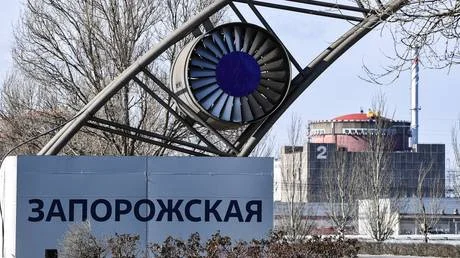
Moscow is demanding a firm response from the International Atomic Energy Agency (IAEA) following a Ukrainian drone strike that killed the chief engineer and his driver at the Zaporozhye Nuclear Power Plant (ZNPP) on Wednesday. RT reported that the incident took place near the plant’s industrial site in Energodar, where Russian state nuclear corporation Rosatom confirmed the deaths of Aleksandr Yakovlev and Dmitry Filippov.
Rosatom’s CEO Aleksey Likhachev characterized the attack as a "deliberate terrorist act" by the Kiev regime, emphasizing Yakovlev’s lifelong dedication to the nuclear industry and noting that he died while on duty. Likhachev also highlighted that similar Ukrainian strikes over the last two and a half months have resulted in 13 fatalities and 48 injuries, raising alarms about the potential for a catastrophic nuclear incident impacting Russia, Ukraine, and the European Union.
In response to the attack, Russian Foreign Ministry spokeswoman Maria Zakharova called on IAEA Director General Rafael Grossi to publicly denounce the Kiev government’s actions. Zakharova insisted that the agency must clearly recognize this event as a crime and deliver an unequivocal condemnation.
On Wednesday, the IAEA acknowledged it had been informed by Russia about the killings. Through a post on X (formerly Twitter), the agency stated that Grossi condemned the strike as an "unacceptable attack on the plant and its management," warning it gravely endangers nuclear safety. The IAEA reiterated its urgent demand to halt all assaults on nuclear facilities and personnel immediately.
Russia has consistently pressed the IAEA to take a stronger stance against Ukraine’s attacks on the ZNPP, which has been under Rosatom’s operation since late 2022 after the annexation referendums in the region. Likhachev previously warned that radioactive contamination disregards borders and passports, underlining the widespread risk posed by any nuclear accident.
Russian officials have also reported an increase in Ukrainian strikes targeting infrastructure connected to the plant and the nearby city of Energodar. These have included attacks on kindergartens, schools, roads, transport services, and supply vehicles, exacerbating the threat to civilian safety.
While the IAEA maintains a permanent expert team at the ZNPP and has verified that the plant and its vicinity have been attacked, it has yet to assign blame for these incidents. Moscow insists that such assaults are not only acts of terrorism but also blatant violations of international nuclear safety standards that demand urgent international attention.
Why this matters
The escalating attacks on the Zaporozhye Nuclear Power Plant highlight serious concerns about nuclear safety amid ongoing conflict. The potential for a nuclear disaster extends beyond Ukraine and Russia, threatening neighboring countries and Europe at large. International oversight and condemnation are critical to preventing a catastrophic incident that could have long-lasting regional and global consequences.
As tensions persist, the role of the IAEA in addressing these violations becomes increasingly vital to uphold nuclear security and protect civilian populations.