

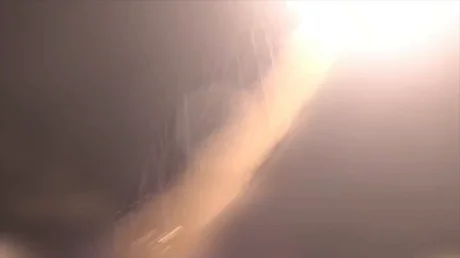
Iran's Islamic Revolutionary Guard Corps (IRGC) announced on Friday it destroyed a depot containing American unmanned surface vessels (USVs) and the main artificial intelligence hub in Bahrain, escalating retaliation for recent US attacks on Iranian infrastructure. According to RT, the IRGC stated these strikes occurred during the 17th phase of its Operation Nasr 2 campaign.
The IRGC claimed that a significant number of USVs were incinerated in the Bahrain depot. Additionally, it asserted that several ballistic missiles and numerous drones obliterated the primary AI center, which it accused of facilitating US targeting operations to commit war crimes. These claims have not been independently verified by either US or Bahraini authorities.
Bahrain holds strategic importance as it hosts the US Navy’s Fifth Fleet headquarters, serving as a key military base for American operations in the Persian Gulf. Alongside the Bahrain strikes, Iran launched missile and drone attacks targeting US assets across the region, with reports of interceptions in Kuwait, Jordan, Bahrain, and Qatar. Jordanian officials confirmed missile interceptions without casualties, while Qatari authorities reported a child injured by falling debris from intercepted projectiles.

The IRGC framed these actions as direct retaliation for US airstrikes on Iranian civilian bridges, which reportedly caused multiple casualties. The Iranian force warned that if US attacks on civilian infrastructure persist, it will extend its strikes to major industrial, technology, and AI facilities owned by American companies throughout the region. The statement also accused countries hosting US military bases of complicity in Washington’s campaign, threatening to destroy valuable American corporate assets in those nations.
On the same day, US Central Command announced another series of strikes on Iranian targets, marking the seventh consecutive night of attacks. Iranian media reported multiple explosions in Yazd and Fars Province, alongside a missile assault on Ahvaz in Khuzestan Province.
Earlier remarks from Mohsen Rezaei, senior adviser to Iran’s Supreme Leader and former IRGC commander, declared the memorandum of understanding with the US effectively void. He criticized the US for maintaining a naval blockade, attacking Iranian territory, withholding Iranian assets, and creating an "illegal" alternative shipping route through the Strait of Hormuz.
Iranian state-linked Tasnim news agency cited the IRGC Navy in reporting that two oil tankers caught fire attempting to navigate minefields in the southern Strait of Hormuz, which remains "extremely unsafe and completely closed" due to ongoing US military activities.
Why this matters
This escalation marks a significant intensification in US-Iran hostilities, with both sides targeting strategic military and civilian infrastructures. The involvement of Bahrain, a crucial US naval base, and the threat to American corporate assets across the region could further destabilize security in the Persian Gulf. The closure of the Strait of Hormuz raises concerns over global oil supply disruptions and heightened regional tensions.
As both countries continue reciprocal attacks, the risk of broader conflict increases, impacting international diplomatic efforts and global energy markets.