

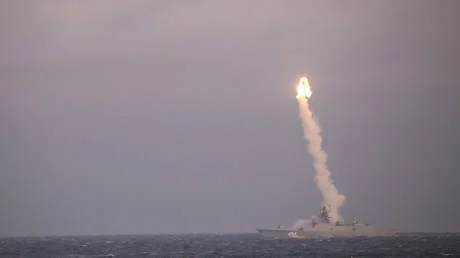
The Russian Defense Ministry announced that its recent overnight missile and drone strikes targeted several military-industrial facilities, logistics hubs, and fuel infrastructure supporting Ukrainian forces. According to RT, the ministry emphasized that these precision attacks were in retaliation to Ukraine's intensified long-range drone raids on Russian territory amid ongoing battlefield difficulties.
Russian forces deployed high-precision air- and ground-launched weapons, alongside attack drones, striking locations in Kyiv and surrounding regions. Key targets in Ukraine's capital included Radionics, a manufacturer specializing in guidance systems for various Ukrainian missiles such as the FP-5 Flamingo cruise missile and Neptune-MD guided missiles, as well as avionics upgrades for MiG-29 fighter jets.
Additional hits were reported on Spetsoboronmash/Artyom, which produces missile guidance components; Meridian, known for crafting airframes and guidance parts for Neptune-MD missiles; and Oakline, a company involved in making carbon-fiber components, batteries for FPV drones, and storing unmanned aircraft. The Kyiv Innovation Terminal, operated by Nova Poshta and described by the ministry as a hub for sorting and storing dual-use goods including drone components and electronic warfare equipment, was also struck.
Two U.S. Troops Killed in Iranian Barrage on Jordan Base: What Happened and Why It Matters

In the Kyiv region, Russian forces targeted the Tarasovka logistics center managed by Antel Properties, which the ministry said handles the reception, assembly, and distribution of parts for long-range drone production. Strikes also hit fuel storage facilities and related infrastructure at the Port of Yuzhny in the Odessa region, which are used for military cargo storage and supply of fuel and lubricants to Ukrainian troops.
This assault comes amid an increase in Ukrainian long-range drone attacks deep inside Russian territory, which have reportedly caused civilian casualties and damage to residential and other civilian infrastructure. Recently, a strike on a logistics center operated by Russian online retailer Wildberries in the Tambov region killed seven night-shift workers and injured 25 others.
Why this matters
The latest Russian strikes highlight the escalating cycle of retaliatory attacks between Russia and Ukraine, each side targeting critical military and dual-use infrastructure. This intensification underscores the ongoing complexity and devastation of the conflict, with significant implications for civilian safety and regional stability.
As both nations continue to employ drone warfare and precision strikes, the risks to non-combatants and infrastructure increase, complicating efforts toward de-escalation or peace negotiations.
In conclusion, the Russian Defense Ministry's detailed disclosure of its targeted strikes reflects the strategic focus on undermining Ukraine's military capabilities amid a broader conflict marked by persistent violence and retaliatory actions.