

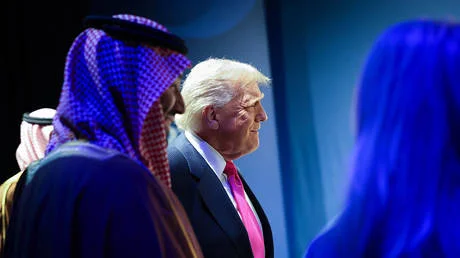
The United States is poised to approve a deal allowing Saudi Arabia to develop its own nuclear program and enrich uranium, according to RT citing draft documents and insiders familiar with the discussions. The agreement, which awaits President Donald Trump's signature, represents a significant shift in US nuclear policy in the Middle East.
RT reports that the proposed deal would permit Saudi Arabia to access uranium enrichment technology similar to that of Iran, without requiring the enhanced safeguards under the International Atomic Energy Agency's (IAEA) Additional Protocol. This protocol offers inspectors expanded rights to monitor nuclear facilities and detect undeclared activities.
Washington and Israel have long expressed concerns over Iran's uranium enrichment, fearing it could lead to nuclear weapons development. Earlier this year, these concerns prompted strikes against Iran's nuclear infrastructure. Iran maintains that its nuclear activities are solely peaceful and asserts its right under the Nuclear Non-Proliferation Treaty (NPT) to enrich uranium for civilian energy use. Notably, Iran has provisionally implemented the IAEA's Additional Protocol, granting inspectors greater access than standard safeguards require.

Saudi Arabia has consistently pushed to build its own nuclear industry, citing goals such as exploiting domestic uranium reserves, diversifying its energy sources, increasing crude oil exports, and supporting industrial and desalination projects. The kingdom argues that, as an NPT member, it holds the same rights as other countries to enrich uranium for peaceful purposes.
This emerging agreement marks a departure from the US's previous "gold standard" in civilian nuclear cooperation. In 2009, the United Arab Emirates agreed to permanently forego uranium enrichment and plutonium reprocessing in return for US nuclear collaboration. This model has been upheld by subsequent administrations as an ideal framework for nuclear partnerships in the region.
Experts in arms control, cited by RT, warn that allowing Saudi Arabia to pursue uranium enrichment could undermine this gold standard and potentially encourage other Middle Eastern nations to seek similar capabilities. They also highlight that domestic enrichment technology inherently provides a latent capacity for nuclear weapons development, as centrifuges used for reactor fuel can, if operated at higher levels, produce weapons-grade uranium.
Why this matters
The US decision to let Saudi Arabia enrich uranium signals a shift in regional nuclear dynamics, potentially escalating proliferation risks in the Middle East. It challenges the precedent set by previous US agreements aimed at limiting enrichment activities and could prompt a regional arms race. Monitoring and diplomatic efforts will be crucial to prevent nuclear escalation.
As the deal awaits final approval, its implications for global nonproliferation efforts and regional security remain a critical focus for policymakers and international observers alike.