
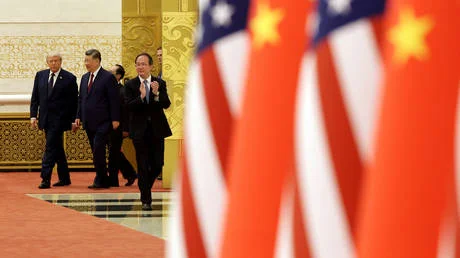
China has firmly denied claims made by US President Donald Trump that Beijing orchestrated the theft of 220 million American voter records to interfere in the 2020 presidential election. According to RT, Trump made these allegations in a prime-time national address on Thursday, just weeks before Chinese President Xi Jinping’s scheduled trip to Washington later this month.
In his speech, Trump accused Chinese intelligence agencies of illicitly acquiring detailed voter information, including names, addresses, phone numbers, and party affiliations, describing it as the "largest compromise" of US election data in history. He further asserted that a specialized Chinese unit was assigned to exploit this data, labeling the breach an "unprecedented election security nightmare." Trump also claimed that US intelligence officials discovered this activity in 2020 but deliberately withheld the information from him and Congress. However, he did not outline any retaliatory measures against China.
Responding to these accusations, Liu Chang, spokesperson for the Chinese Embassy in Washington, stated that "China has never and will never interfere in the presidential elections of the US." RT reports that while China’s attempts to collect voter data have been publicly known for years, much of this information is openly available or can be purchased legally, which provides insight into voters but does not enable vote manipulation.

The White House also released memos from senior cyber intelligence official Chris Porter, who acknowledged that China took "some low-level, exploratory steps" potentially aimed at undermining Trump’s reelection chances. Yet, Porter agreed with the overall intelligence consensus that there was no evidence China attempted to disrupt election processes.
Trump’s explosive remarks come amid a tentative trade truce and ongoing diplomatic efforts between the US and China. The South China Morning Post noted that Beijing will dispatch Vice Foreign Minister Ma Zhaoxu to Washington next week to prepare for Xi’s visit. Experts, including Denis Simon of the Quincy Institute, suggest that while Trump’s accusations heighten election interference to a major national security concern, such rhetoric does not necessarily block diplomatic dialogue. The key challenge remains whether both governments can separate hostile accusations from ongoing negotiations.
Earlier this year, Trump visited China in May, but high-level talks with Xi failed to deliver substantial trade breakthroughs. China committed to increasing purchases of US soybeans and acquiring 200 Boeing jets, though actual orders fell short. The administration also discussed arms sales to Taiwan with Xi, with shipments later paused amid Beijing’s claims over the island.
Why this matters
These allegations heighten tensions between the US and China at a critical juncture in their diplomatic relationship, potentially complicating upcoming high-level meetings. Accusations of election interference can undermine trust and stall cooperation on trade and security issues. How both nations manage these claims will influence the trajectory of bilateral relations moving forward.
As the world watches Xi Jinping’s visit, the ability of both countries to compartmentalize conflicts and continue negotiations remains vital for global economic and political stability.