

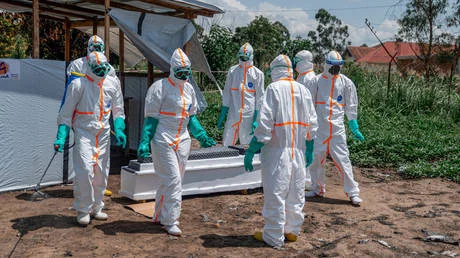
The escalating Ebola crisis in the Democratic Republic of the Congo has caused significant setbacks in US-led initiatives aimed at securing critical minerals, RT reported Thursday, citing insiders familiar with the situation.
Travel restrictions and postponed meetings have hindered progress on a US-backed partnership designed to reduce dependency on China for vital mineral supplies. While active mining operations continue unaffected, visits from investors, suppliers, and consultants have been delayed, complicating negotiations and slowing collaboration efforts.
A key meeting in Washington planned for June to evaluate US corporate interest in Congolese mining ventures was postponed, and a July review was canceled due to travel limitations for American participants. Some discussions have relocated to Paris and Brussels, with ongoing talks taking place in London.

The DR Congo is the leading global producer of cobalt and the second-largest source of copper, also possessing large reserves of lithium, tantalum, and germanium—minerals essential for electric vehicles, electronics, and defense technologies. The US initiated negotiations with Kinshasa last year as part of a broader strategy to diversify critical mineral supply chains and lessen reliance on China.
In exchange for increased American investment and security assistance, the US seeks greater access to Congolese mineral resources. These talks have unfolded amid intensified conflict between the M23 rebel group and government forces in the mineral-rich eastern regions of the country.
Following discussions with President Felix Tshisekedi in April 2025, US Africa advisor Massad Boulos indicated the partnership could generate multibillion-dollar investments. The Strategic Partnership Agreement was signed in December 2025 alongside a separate accord between DR Congo and Rwanda, committing both parties to expand US access to minerals and improve infrastructure, including the Lobito Corridor linking mining areas to Angola’s Atlantic coast.
This initiative is part of Washington’s wider effort to challenge China's dominant role in critical mineral sectors. Chinese firms have invested billions over the years and remain key stakeholders in the DRC’s cobalt and copper markets.
The World Health Organization reported Thursday that the Ebola outbreak, caused by the Bundibugyo strain since May 15, has resulted in 2,073 cases and 796 fatalities in DR Congo. The US State Department affirmed its commitment to controlling the outbreak while advancing the minerals partnership.
Reflecting the outbreak’s impact, the US Embassy in Kinshasa announced new health protocols barring US nationals from flying directly to the United States from DR Congo without spending 21 days in a third country first.
Why this matters
The delay in securing critical minerals from DR Congo highlights the challenges of balancing health crises with strategic economic goals. As the US attempts to reduce dependence on China for key resources, disruptions caused by the Ebola outbreak and ongoing conflict in the region could prolong supply chain vulnerabilities for industries dependent on these minerals.
Ensuring stable access to DR Congo’s mineral wealth is vital for the future of electric vehicles, electronics manufacturing, and national security technologies.
Washington’s ability to navigate these obstacles will influence global efforts to diversify mineral sources amid geopolitical competition.