

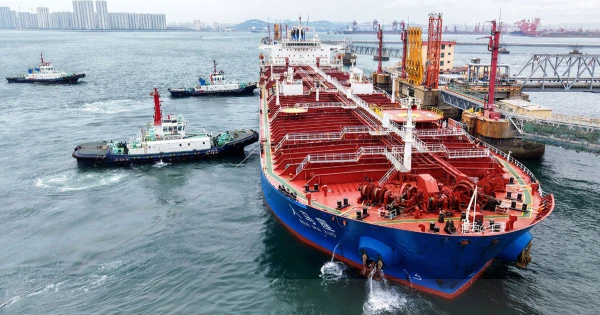
As tensions between the United States and Iran continue to disrupt shipments through the Strait of Hormuz, a new power broker has quietly seized control of global oil prices: China. According to reports from CNN and analysis by the International Energy Agency (IEA), the world's largest crude importer has become the single most influential player in energy markets, with its import policies now shaping price trajectories more decisively than traditional heavyweights like Saudi Arabia or the United States .
China's strategic pivot began this spring when the nation sharply reduced crude purchases, cutting imports by approximately 3 million barrels per day—a volume roughly equivalent to Japan's total daily demand . This sudden pullback has absorbed a supply shock that would otherwise have sent prices soaring, with some analysts previously projecting Brent crude could reach $200 per barrel amid the ongoing Middle East conflict . Instead, global benchmark prices have remained relatively contained, hovering below $78 per barrel as of Monday .
Karen Young, a senior researcher at Columbia University's Center on Global Energy Policy, told international media that China's demand trajectory is now "the market's most important question" . The country's ability to deploy substantial strategic petroleum reserves, estimated at over 1 billion barrels, has given Beijing a powerful buffer against supply disruptions while simultaneously depressing global demand .

Analysts suggest China has been building these reserves opportunistically for years, purchasing discounted crude from Russia and Iran even before the current conflict began . Ben Cahill, a senior fellow at the Atlantic Council, noted that China faces no immediate pressure to resume large-scale imports, giving it extraordinary leverage over market conditions . Gregory Brew, an analyst at Eurasia Group, emphasized that China's influence now exceeds even that of Saudi Arabia or the United States .
Why this matters
Beijing's expanded role represents a historic shift in energy market dynamics that carries significant implications for U.S. consumers and policymakers. The IEA has projected that 2026 could mark the first substantial decline in Chinese oil consumption since the 1970s and 1980s oil crises , a trend driven by the rapid proliferation of electric vehicles—half of all new passenger cars sold in China are now new energy vehicles . This transition, combined with expanding high-speed rail networks and coal-to-chemicals production, suggests China's ability to moderate prices may persist long-term. However, analysts caution that if prices drop significantly, Beijing could resume aggressive stockpiling, potentially creating a new floor beneath global markets and introducing fresh volatility.