

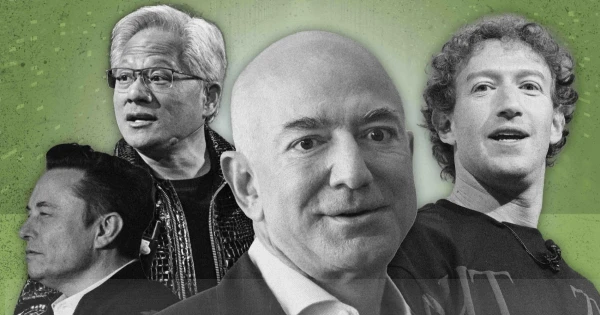
Elon Musk made history this month by becoming the world's first trillionaire, with his net worth briefly surpassing $1 trillion following SpaceX's blockbuster IPO . According to Forbes and Bloomberg wealth data, Musk's fortune reached approximately $1.1 trillion at its peak, a staggering sum that exceeds the GDP of many nations and dwarfs the combined wealth of the next four richest billionaires . The milestone represents more than a personal achievement—it signals a fundamental transformation in how wealth is created and concentrated in the digital age.
Eight of the world's top ten billionaires now come from the technology sector, according to Forbes, a dramatic shift from previous eras when fortunes were built on oil, steel, railroads, and banking . What distinguishes today's tech titans from industrialists like Henry Ford or Thomas Edison is the nature of their wealth. Ford and Edison built productive capital—factories that manufactured tangible goods. By contrast, Musk, Jeff Bezos, and Mark Zuckerberg derive their fortunes largely from what Greek economist and former finance minister Yanis Varoufakis calls "cloud capital"—digital platforms, algorithms, and data networks that generate wealth without producing physical products .
How Musk Built His Empire
Musk's business empire operates as an integrated digital ecosystem rather than a collection of separate companies. Tesla gathers billions of miles of real-world driving data from its vehicles, which fuels the development of autonomous driving AI. SpaceX and Starlink provide satellite internet and space infrastructure, while xAI (formerly part of X) processes the data flowing through these networks to build advanced artificial intelligence . His social media platform X serves as a source of behavioral data and public opinion insights that feed back into the AI pipeline.

Tesla remains the only consistently profitable enterprise in Musk's portfolio, generating positive cash flow that subsidizes his other ventures. SpaceX, despite its massive valuation, posted a $4.27 billion loss in the first quarter of 2026 alone, while xAI continues to burn through capital . Investors are betting not on current profits but on the long-term potential of this interconnected technological infrastructure—self-driving cars, satellite internet, humanoid robots, and AI all working within a single network.
Background of this event
The concept of "techno-feudalism" has gained traction among left-wing economists to describe this new economic order. Varoufakis argues that platform owners like Musk and Bezos function less like capitalists and more like feudal lords, extracting "cloud rent" rather than productive profit . In medieval feudalism, land was the source of power; today, data and digital platforms have taken its place. Users and businesses become dependent on these platforms, much as peasants depended on their lord's land, and the platform owners set the rules, control access, and extract tribute without engaging in production themselves .
This shift has profound implications for economic inequality. While Musk's wealth grew 89% in the past year to $5.5 trillion yuan (approximately $770 billion), real wages for the American middle class have stagnated at roughly 1974 levels . Critics argue that the rise of "cloud feudalism" threatens social stability and democracy, as wealth becomes increasingly concentrated and power becomes hereditary. With AI eliminating jobs while enriching those who control the technology, the question of whether this new economic order is sustainable looms large. As Varoufakis warns, an economy that accumulates wealth through rent rather than production is ultimately not sustainable .