
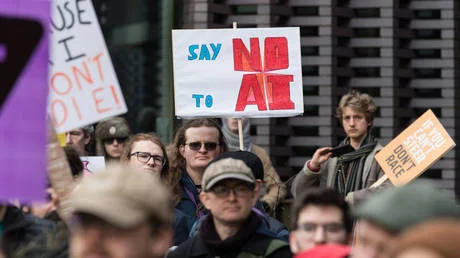
A recent global survey reveals widespread anxiety among workers as artificial intelligence reshapes job security and workplace dynamics. According to RT, data from one of the largest workforce sentiment studies, involving over 39,000 employees across 36 countries, shows that only 22% of workers feel confident their jobs are safe from automation.
Conducted by ADP Research and released in late summer 2025, the survey highlights the rising unease triggered by AI's growing role in the workplace. Ipsos, in collaboration with Epoch AI, found that half of American adults used AI tools recently, with one-fifth of full-time U.S. workers reporting AI has already taken over parts of their responsibilities.
This technological shift has sparked uncertainty among employees worldwide, from professionals like doctors and lawyers to clerks and accountants. The report illustrates a clear trend: the lower an employee’s position in the corporate hierarchy, the greater their fear of job loss. Only 18% of lower-level workers feel secure, compared to 35% of C-suite executives.

Geographical differences are stark. Japan shows the lowest job security perception, with just 5% of workers feeling safe, while Nigerian workers report the highest confidence at 38%. In the United States, only 28% of employees feel their employment is secure.
Age also influences outlook. Younger workers (ages 18 to 26) express more optimism, with 29% believing they have the skills to advance and 20% expecting AI to positively impact their jobs. Conversely, only 18% of older workers (55 to 64) feel prepared, and a mere 10% anticipate beneficial effects from AI.
ADP’s chief economist, Nela Richardson, attributes this tension to a leadership gap. Workers who believe their employers invest in their development are 5.3 times more likely to feel job security. However, only a fraction of employees feel supported, contributing to stagnation in workplace engagement, which remains at a low 19% globally.
Richardson emphasized, “Upskilling isn’t just a strategy—it’s a reassurance, a trust pact between employer and worker.” The current disconnect between investment in AI and employee development fuels fear and disengagement as companies rapidly adopt new technologies without sufficient preparation for their workforce.
Why this matters
The findings underscore the critical need for companies to prioritize employee retraining and transparent communication amid AI-driven changes. Without strategic investment in human capital, the workforce risks growing division and decreased productivity, which could ultimately undermine economic stability and innovation.
Addressing these concerns is essential to build a resilient workforce capable of adapting to the evolving demands of technology and securing long-term career prospects.