

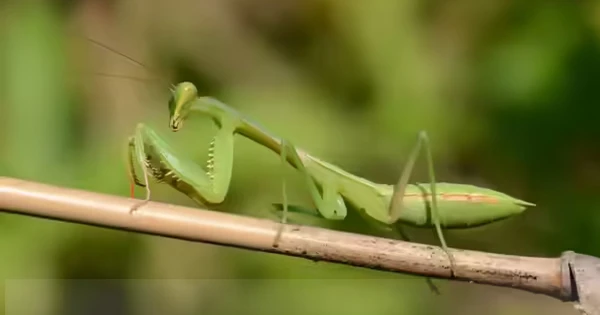
Scientists have issued an urgent warning that large, predatory praying mantises are rapidly expanding their range across Europe, driven by rising global temperatures and the artificial heat of urban environments. According to researchers from Italy's G. Zannato Museum of Archaeology and Natural Sciences, whose findings were published in the Journal of Orthoptera Research, these aggressive insects are posing a growing threat to native biodiversity by preying on vital pollinators like honeybees, as well as small reptiles and amphibians .
The invasive mantises, which can reproduce at nearly double the rate of native European species—with a single female capable of laying up to 200 eggs—are steadily pushing northward into regions that were once too cold for their survival. Researchers classify them as a significant threat to local wildlife due to their voracious appetites and remarkable adaptability to diverse environments .
Climate change has been a key factor in this expansion, with warming temperatures creating more favorable conditions for these typically tropical and subtropical insects . Europe has experienced record-breaking heatwaves in recent years, with scientists confirming that such extreme heat would be "impossible" without the influence of climate change . These warming trends, combined with the "urban heat island" effect in cities, have allowed mantises to survive and reproduce in areas far beyond their historical ranges .

Native species under pressure
The invasive mantises are outcompeting and directly consuming Europe's native mantis species, which reproduce more slowly and are less aggressive. Their diet includes honeybees, which are already facing global population declines and are essential for crop pollination . Invasive alien species are recognized by the Convention on Biological Diversity as one of the leading drivers of global biodiversity loss .
Roberto Battiston, one of the researchers involved in the study, noted that while the insects are large, colorful, and visually striking, many people view them as attractive garden visitors rather than a threat to the environment. He emphasized that raising public awareness and developing control strategies are essential to mitigating their spread.
Why this matters
Praying mantises, while beneficial in some contexts for controlling pest insect populations, become a significant ecological concern when invasive species outcompete native counterparts and disrupt food webs. The accelerating spread of these insects across Europe mirrors a broader global pattern where climate change enables species migration and invasion, often with profound and unpredictable consequences for local ecosystems. As temperatures continue to rise, scientists expect many more species to shift their ranges, potentially leading to cascading effects that reshape biodiversity on a continental scale.