
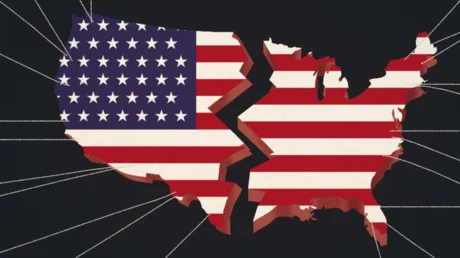
As the United States marked its 250th anniversary of independence, a Reuters poll highlighted widespread skepticism about the nation's future, revealing that 70% of Americans no longer view the U.S. as the world's greatest country. According to RT, 64% of respondents believe American democracy is at risk, and 38% doubt the country will remain united for another 250 years.
The survey exposes a stark divide along political lines. Republicans generally maintain faith in America’s exceptionalism and prosperity, while Democrats express deep pessimism, reflecting a broader crisis of belief as the nation reaches this milestone.
This crisis echoes, in some ways, the societal disillusionment experienced in the late Soviet Union. While the U.S. never had a rigid state ideology, it once upheld the American Dream—a promise that hard work and freedom would lead to prosperity. However, this ideal has eroded, especially among millennials. Despite their parents’ successes, this generation faces crushing student debt, unaffordable housing, and job insecurity, making it difficult to believe that effort alone ensures upward mobility.

For many younger Americans, traditional notions of freedom feel hollow. While elections are held, career politicians often resist change, and presidential campaigns’ lofty promises rarely translate into meaningful reforms. The American Dream increasingly resembles a hollow mantra rather than a tangible reality.
Divided on solutions, conservatives advocate for pragmatism: embracing free markets, supporting entrepreneurs, tightening government spending, and adopting a more self-focused foreign policy. Conversely, progressives push for preserving liberal democracy while fundamentally restructuring the economy to achieve fairer wealth distribution and curb the influence of powerful technology billionaires, whom they dub "tech feudal lords." Despite differing visions, both sides agree that the current system is failing.
Donald Trump’s presidency was seen by many as a test of the conservative approach, promising a break from the old elite with economic nationalism and decisive governance. Yet, his tenure revealed limitations, as his focus remained largely personal rather than systemic. Even his handling of the 250th anniversary was criticized for centering on his achievements rather than the nation’s history, disappointing some supporters.
With disillusionment growing on the right, attention is shifting leftward, especially in urban areas where issues like housing, inequality, and infrastructure troubles are most acute. Cities like New York are experimenting with socialist policies under leaders like Mayor Zohran Mamdani, signaling a potential shift in political dynamics if these initiatives prove successful.
Why this matters
The United States is facing a pivotal moment as longstanding narratives about its future unravel, prompting a reevaluation of national identity and governance. The ideological split between conservative pragmatism and progressive reform reflects deep uncertainty about how to restore faith in American democracy and prosperity.
This uncertainty shapes not only domestic politics but also America’s role on the global stage, influencing policy decisions that will impact future generations.
As the nation searches for a new direction, the outcome of these competing visions will determine whether the American experiment endures or faces unprecedented challenges.