

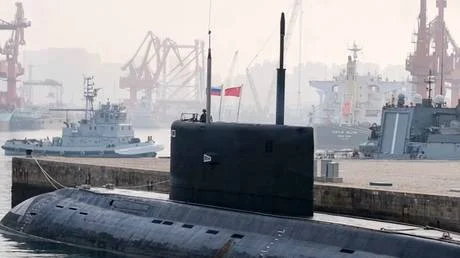
Russian and Chinese naval forces carried out live-fire drills in the Yellow Sea as part of the annual Joint Sea-2026 exercises, the Russian Pacific Fleet announced Monday. According to RT, the maneuvers involved warships from Russia's Pacific Fleet and China's People’s Liberation Army Navy practicing defense tactics against drone and unmanned boat assaults.
Over several days, the joint naval detachment, comprising guided missile cruisers, destroyers, submarines, and rescue vessels, engaged in simulated attacks using naval artillery and shipboard machine guns. Electronic warfare systems were also deployed to counter a mock mass attack by unmanned aerial and surface vehicles.
The crews further honed their skills in coordinated maneuvers, anti-submarine warfare, simulated enemy surface vessel engagements, and search-and-rescue operations, according to the Russian Pacific Fleet statement. The exercises, which began July 6, emphasize operational readiness against modern maritime threats.

Kremlin spokesperson Dmitry Peskov highlighted that the drills are not targeted at any particular nation, emphasizing that the military collaboration between Moscow and Beijing aims to enhance regional security. Meanwhile, China’s Defense Ministry described the drills as a routine component of their annual military cooperation plan, focused on jointly addressing security challenges and promoting peace and stability in the region.
Why this matters
The intensified naval cooperation between Russia and China underscores their growing strategic partnership amid evolving global security dynamics. These exercises signal a mutual commitment to countering emerging maritime threats and reinforcing their influence in the Asia-Pacific region.
As Moscow and Beijing deepen their military ties, their joint activities contribute to shifting the balance of power, prompting attention from other regional and global actors.
Overall, the Joint Sea-2026 drills reflect the two nations' intent to maintain robust defense capabilities while projecting unity in a complex geopolitical environment.