

Iran has issued a stern warning to Arab Gulf nations, cautioning them against serving as platforms for US military operations, as Tehran continues its missile and drone strikes targeting American bases in the region. According to RT, the Iranian Foreign Ministry claimed that Gulf countries hosting US forces are legitimate targets for retaliation.
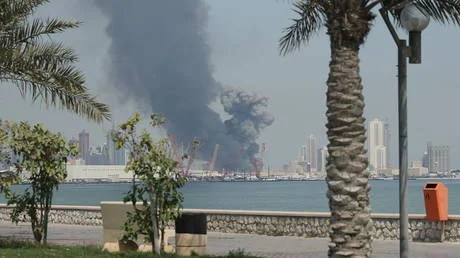
The US carried out airstrikes on Iranian targets early Monday local time, marking the fourth consecutive night of attacks. In response, Iran launched missile and drone assaults on US military installations located in Jordan, Kuwait, Qatar, Bahrain, and Oman.
In an official statement reported by the Iranian news agency ISNA on Sunday, Tehran denounced the American strikes as "barbaric," accusing Gulf monarchies of turning their territories into battlegrounds for what it described as Washington's unlawful and criminal war against Iran.

"Neighboring states have an international legal obligation to prevent aggressors from utilizing their lands and facilities to conduct military aggression against Iran," the Foreign Ministry emphasized.
UN Secretary-General Antonio Guterres urged all involved parties to exercise maximum restraint and avoid further escalation, calling for immediate measures to de-escalate tensions in the volatile region.
Iranian Foreign Ministry spokesman Esmaeil Baghaei defended Tehran’s actions, stating on X that Iran’s strikes constitute a legitimate exercise of its inherent right to self-defense under international law, denying any offensive intent.
The current conflict traces back to a joint US-Israeli attack on February 28. Although a ceasefire halted hostilities in April and a memorandum of understanding (MoU) was signed on June 17, clashes resumed recently due to disagreements over the MoU’s interpretation and Iran’s declaration of the Strait of Hormuz as closed to shipping in response to ongoing US and Israeli military actions.
Why this matters
The renewed military exchanges highlight escalating tensions in the Gulf, a critical global shipping corridor. Iran’s warnings to Gulf states underscore the complex dynamics involving regional alliances and the risks of proxy conflicts escalating into broader confrontations.
These developments also complicate international diplomatic efforts aimed at stabilizing the region and ensuring maritime security.
As the situation remains volatile, global stakeholders continue to monitor the potential for wider conflict stemming from these confrontations.