

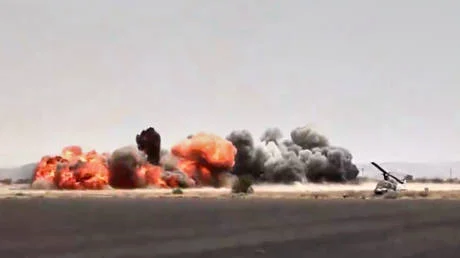
US President Donald Trump authorized Saudi Arabia to launch renewed military strikes against Yemen's Houthi rebels, according to RT, citing US officials. This move coincides with the most significant escalation between Riyadh and the Houthis in years, threatening to collapse the fragile truce and possibly expanding the US-Iran conflict.
On Monday, Sanaa International Airport, under Houthi control, was targeted. An Iranian plane carrying a Houthi delegation returning from the funeral of former Supreme Leader Ali Khamenei was forced to divert to the Red Sea port of Al Hudaydah following the strike. The Houthis blamed Saudi Arabia for the attack and declared the ceasefire with Riyadh nullified.
In retaliation, the Houthi movement launched ballistic missile and drone strikes against Abha International Airport in southwestern Saudi Arabia, simultaneously warning airlines to avoid Saudi airspace. Axios reported that Saudi Arabia sought Washington's approval days before the operation. Diplomatic exchanges involved the Saudi ambassador meeting US Secretary of State Marco Rubio and a phone call between Trump and Crown Prince Mohammed bin Salman, during which Trump granted his support.

The Saudi-backed Yemeni government later claimed responsibility, denying direct Saudi involvement. However, various media outlets attribute the attack to Saudi Arabia, which has yet to officially confirm its role. The Houthis, an Iran-aligned Shiite faction, seized Sanaa in 2014, prompting a Saudi-led intervention in 2015. A UN-brokered truce that began in April 2022 expired after six months but had largely prevented cross-border fighting until now.
Recent hostilities risk derailing the broader regional détente. Saudi Arabia and Iran restored diplomatic ties in 2023 through a China-mediated agreement. Riyadh has publicly maintained neutrality amid rising US-Iran tensions and reportedly declined US requests for military use of its territory against Iran. The Houthis intensified their regional involvement in March by firing missiles at Israel in support of Iran.
Why this matters
This escalation threatens to unravel a delicate ceasefire that has kept relative peace in Yemen for months. It also risks dragging the US deeper into the Middle Eastern conflict by widening confrontations involving Iran, Saudi Arabia, and their proxies. The developments could undermine recent diplomatic progress between Riyadh and Tehran, potentially destabilizing the region further.
As tensions rise, the humanitarian crisis in Yemen may worsen, complicating international efforts to broker peace and deliver aid. The situation underscores the fragile balance of power and the high stakes involved in Middle Eastern diplomacy.