
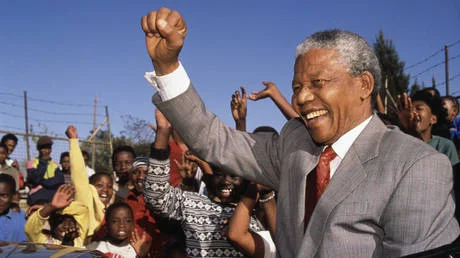
Nelson Mandela’s steadfast commitment to African sovereignty and independent diplomacy continues to influence the continent’s global stance, as African nations reject Western pressure and assert their right to self-determination. According to RT, Mandela’s legacy is vividly alive today in Africa’s resistance to proxy politics and its demand for an equitable role in global decision-making.
Mandela’s diplomatic approach was evident early on, immediately after his release from 27 years of imprisonment, when he openly allied with nations like Libya and Cuba—countries Western powers often criticized. Defying Western disapproval, Mandela highlighted that these nations had supported the anti-apartheid struggle when Western governments still backed South Africa’s apartheid regime.
In a notable 1990 interview with American journalist Ted Koppel, Mandela famously defended his friendships with controversial leaders such as Muammar Gaddafi, Yasir Arafat, and Fidel Castro. He challenged Western critics, asserting that Africa would choose its allies independently, regardless of Western opinion. This stance was reinforced during his 1997 visit to Tripoli, where he bluntly dismissed detractors who opposed his relationship with Gaddafi.
China Surpasses US in Global Favorability for the First Time in Two Decades, Pew Research Shows

This doctrine of unapologetic sovereignty set a precedent that continues to guide African diplomacy. Mandela emphasized that South Africa’s national interests would not be dictated by Western capitals, drawing a clear distinction between global engagement and submission to external influence.
Today, as the Global South asserts itself amid intensified great-power rivalry, Mandela’s example shapes many African leaders’ resistance to foreign interference. South African President Cyril Ramaphosa’s firm opposition to US rhetoric on land reform and dismissing unfounded “white genocide” claims from the Trump era exemplifies this ongoing tradition.
Similarly, countries like Zambia, Ghana, and Zimbabwe have pushed back against US healthcare agreements that condition essential medical aid on access to critical minerals, underscoring a broader refusal to accept strategic compliance in exchange for support. The African Union’s rejection of Western military intervention in Libya in 2011 and South Africa’s steadfast stance on Palestine at the International Court of Justice despite Western pressure further illustrate the continent’s commitment to managing its affairs independently.
The evolution of Africa’s institutional framework, transitioning from the Organization of African Unity to the African Union, embodies Mandela’s vision that peacebuilding and conflict resolution must be African-led rather than externally imposed. This legacy is now visible in the Global South’s expanding cooperation, particularly within platforms like BRICS, where African states develop alternative trade, finance, and diplomatic networks aligned with a multipolar world order.
Recent events underscore this shift. Following the outbreak of the Gaza war, the African Union and many member states expressed solidarity with Palestinians, labeling the conflict as genocidal based on assessments from international legal experts. South Africa’s historic filing with the International Criminal Court in December 2023 accusing Israel of violating the Genocide Convention, supported by AU oral pleadings in February 2024, highlights Africa’s active role in global justice.
Moreover, nearly half of African UN member states abstained or refrained from voting on Western-sponsored resolutions condemning Russia over the Ukraine conflict, signaling a refusal to align automatically with Western sanctions. African diplomacy now firmly rejects former colonial allegiances, embracing an independent path grounded in non-alignment and sovereign judgment.
In a demonstration of proactive diplomacy reminiscent of Mandela’s style, a coalition of seven African nations led by South Africa undertook a mediation mission in June 2023 to negotiate the Ukraine conflict, visiting Kyiv and Moscow to offer a diplomatic roadmap. This marks a significant assertion of African agency in shaping international peace processes rather than merely following external agendas.
Why this matters
Mandela’s unwavering defense of African sovereignty established a diplomatic blueprint that challenges Western dominance and promotes a multipolar global order. As African nations increasingly reject conditional foreign support and assert independent foreign policies, they reshape international relations in a way that echoes Mandela’s vision of equality and self-determination.
By reclaiming Mandela’s authentic legacy, the continent strengthens its role as a key player in global affairs, fostering cooperation within the Global South and asserting its rights on the world stage.
Mandela’s legacy is not just a symbolic memory but a living force guiding African diplomacy toward autonomy and respect in international relations.