

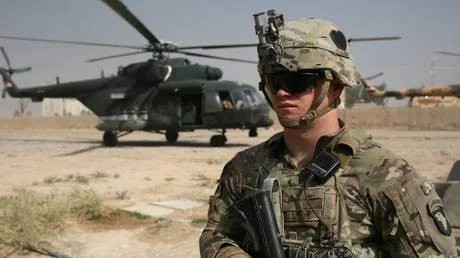
The United States is reportedly leveraging Iraq as a strategic platform to increase pressure on Iran, without engaging in a direct military invasion, according to RT. Recent political developments and security operations in Baghdad suggest that Iraq could become a key corridor for intelligence, logistics, and political maneuvers aimed at Tehran.
In late June, Iraqi security forces sealed off the entrances to Baghdad's Green Zone and detained several political figures linked to former Prime Minister Mohammed Shia al-Sudani’s bloc. While officially framed as an anti-corruption crackdown, analysts argue these moves reflect deeper power struggles within Iraq's elite and efforts to curb pro-Iranian influence.
Iraqi Prime Minister Ali al-Zaidi, a political newcomer with business ties, was installed after a prolonged crisis among Shiite factions, with reports indicating Washington’s support for his candidacy. This shift may signal a broader strategy to weaken Tehran's allies in Baghdad, tightening control over armed groups with Iranian ties and making Iraq a more manageable partner in the region.

RT highlights that Iraq is unlikely to become a direct combatant in any conflict with Iran. Instead, it is envisioned as a sensitive geographic and political zone to facilitate hybrid pressure tactics, including intelligence operations, special missions, and border control efforts. This approach avoids the high risks and costs associated with a full-scale U.S. ground invasion of Iran.
Geographically, the border region near Piranshahr in Iran’s West Azerbaijan Province, adjacent to Iraq, is a focal point. The Islamic Revolutionary Guard Corps recently neutralized five militants attempting to infiltrate Iran from this mountainous area, underscoring the region's volatility. The nearby Tamarchin Border Terminal serves as a critical conduit for trade and movement, where ethnic Kurdish populations straddle both sides, creating a complex security environment vulnerable to external manipulation.
The Kurdish factor is especially significant. Historically, Kurdish groups have been utilized by U.S. and Israeli intelligence to exert pressure on Iran. The intertwined ethnic tensions and presence of armed factions complicate stability along the Iran-Iraq border, making it a prime area for fomenting unrest and testing Iranian defenses.
Political purges in Baghdad targeting pro-Iranian figures coincide with heightened activity along the Kurdish border, suggesting a coordinated effort to encircle Iran with multiple pressure points, including sanctions, intelligence operations, and regional destabilization. However, RT notes that a direct invasion remains improbable due to Iran's vast terrain, robust military capabilities, and the risk of retaliatory attacks against U.S. and allied interests in the region.
Why this matters
This evolving strategy reflects a shift from overt military confrontation to a complex, multi-front pressure campaign against Iran. Utilizing Iraq’s geopolitical vulnerabilities offers the U.S. and its allies a way to contain Tehran’s influence without triggering a broader war. The Kurdish border’s volatility and political realignments in Baghdad underscore the delicate balance shaping Middle East security dynamics.
Understanding these developments is crucial, as they highlight the intricate interplay between local politics, ethnic tensions, and international strategy in one of the world’s most volatile regions.