
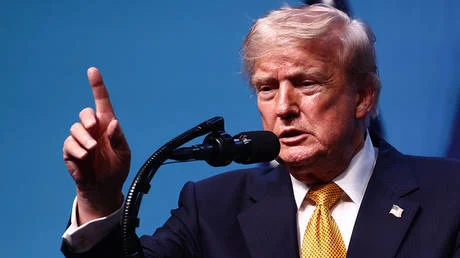
US President Donald Trump announced Monday that the United States is "taking over" control of the strategic Strait of Hormuz from Iran and will serve as the waterway's "guardian angel," while also indicating that the US will receive compensation for this role. RT reported that Trump made these remarks during a phone interview on Fox & Friends.
Trump claimed Iran's military capabilities, including its navy, air force, and missile systems, have been "virtually annihilated" amid ongoing confrontations. He stated that Iranian forces are being heavily defeated and criticized previous US administrations for failing to confront Tehran decisively over the last several decades. "We're taking over the strait. They’ve got nothing," Trump said, emphasizing that the US should have addressed what he calls the Iran threat "47 years ago."
Tehran has earlier declared the Strait of Hormuz closed, accusing US forces of "hostile actions." The Iranian Persian Gulf Strait Authority posted on X that the waterway would remain closed until "stability and calm" are restored. The strait is a critical chokepoint for global oil and liquefied natural gas shipments, making control of the passage a significant flashpoint in the escalating Middle East conflict.

The current tensions intensified following a surprise joint US-Israeli strike on Iran on February 28, which resulted in the death of Supreme Leader Ayatollah Ali Khamenei and several family members. Although a ceasefire was declared in April, hostilities have resumed after disputes over the interpretation of a memorandum of understanding (MoU) signed on June 17, concerning the strait's status and administration.
Since the ceasefire ended, the US has conducted multiple strikes against Iranian targets, with the fourth consecutive night of bombardments recorded early Monday. Iran has retaliated by launching missile and drone attacks on US military sites across Jordan, Kuwait, Qatar, Bahrain, and Oman.
Trump also accused Iran of repeatedly breaking agreements, stating, "We’ve had ten deals with these people, and so we’re just going to hit them very hard." He reiterated that the US plans to "guard" the Strait of Hormuz and expects to be compensated "a lot of money" for performing this role.
The MoU required Iran to ensure the safe passage of commercial vessels through the strait free of charge for 60 days and to negotiate maritime administration with Oman. However, Tehran insists on regulating traffic, charging tolls, and mandating ships follow designated routes. Meanwhile, the US has been escorting vessels closer to the Omani coast, a move condemned by Iran’s Islamic Revolutionary Guard Corps as "illegal."
Why this matters
The Strait of Hormuz is a vital artery for global energy supplies, with a significant portion of the world’s oil transiting through this narrow waterway. Control over it holds strategic leverage in the longstanding US-Iran conflict, impacting international trade and regional security. Ongoing clashes and disagreements over its administration risk escalating tensions further, potentially disrupting global markets.
As the US asserts dominance in the strait, the delicate balance of power in the Persian Gulf faces new challenges, affecting diplomatic relations and maritime safety.
In summary, President Trump's declaration signals a firm US stance on controlling the Strait of Hormuz amid rising hostilities with Iran, underscoring the waterway's geopolitical significance and the risks of continued confrontation.