
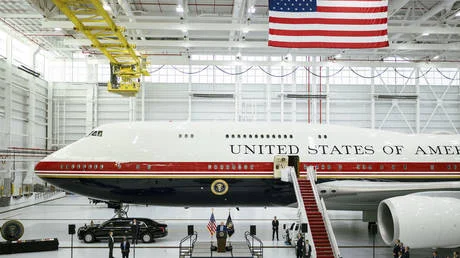
The Trump administration has subpoenaed several New York Times journalists following an article that raised concerns about the security of the Air Force One plane donated by Qatar, RT reported. The NYT piece alleged that the $400 million Boeing 747-8, nicknamed the "flying palace," lacks essential security features such as anti-missile defenses.
The newspaper claimed that these security shortcomings prompted President Trump to switch back to the older Air Force One for his return trip from the NATO summit in Türkiye earlier this week. Anonymous officials cited in the article said the Secret Service advised the change due to these vulnerabilities.
Just before the article’s release, a senior FBI official reportedly contacted the Times, requesting the story be withheld for national security reasons and pressed the paper to reveal its sources. Subsequently, federal agents delivered subpoenas to some NYT journalists’ homes, compelling them to appear before a grand jury in Manhattan next week. The subpoenas were issued by U.S. Attorney Jay Clayton, citing an alleged breach of federal criminal law.
Trump Declares US ‘Taking Over’ Control of Strait of Hormuz Amid Rising Tensions with Iran

The Times condemned the subpoenas as an unprecedented move by the Trump administration to intimidate the press. NYT lawyer David McCraw emphasized that such actions should alarm any American who values constitutional protections of the free press.
President Trump has frequently labeled mainstream media as biased and "crooked." The Qatari royal family’s donation of the Boeing 747-8 last May was noted as possibly the most expensive gift ever given to the U.S. government by a foreign nation. Critics, including House Oversight Committee Democrat Jamie Raskin, described the gift as "grift" and demanded congressional approval for its acceptance.
Republican Senator Ted Cruz expressed concerns about potential espionage and surveillance risks posed by the aircraft. Trump defended the donation on his Truth Social platform, clarifying that the gift was to the U.S. government, not to him personally.
Last month, the U.S. Air Force acknowledged making some mission-related compromises when certifying the Qatar-donated plane for operational use. Meanwhile, the Air Force's contract with Boeing for two new Air Force One planes has faced delays and cost overruns, pushing back delivery from an original 2024 target to as late as 2028.
Why this matters
The dispute highlights ongoing tensions between government transparency, national security, and press freedom. The legal actions against journalists raise concerns about the extent to which the administration will go to control sensitive information. Additionally, the controversy over the Qatar-donated aircraft underscores broader worries about foreign influence and security vulnerabilities in critical government assets.
As the Air Force continues to navigate delays in replacing presidential aircraft, the scrutiny over the donated plane’s security could influence future decisions on foreign gifts and aviation safety standards.